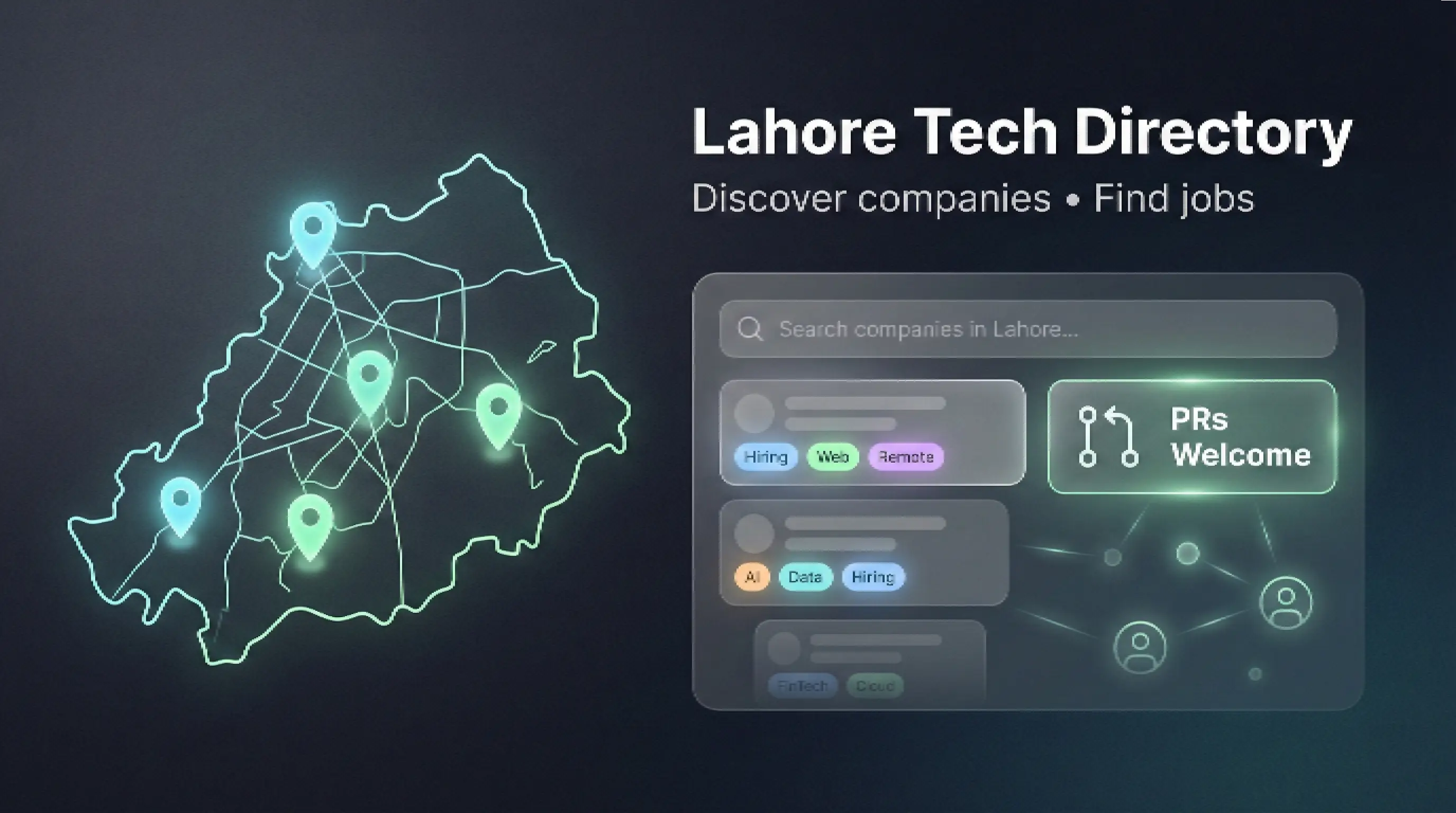
Building a Community-Driven Lahore Software Houses Directory
Finding reliable, up-to-date information about software houses in Lahore is harder than it should be, especially when you're actively job hunting. So I built a curated directory that's easy to browse, easy to contribute to, and transparent about where the data comes from: a single Markdown table in the repo.
The goal is simple: help developers, designers, and tech folks discover companies, understand what they do, and navigate Lahore's job market with less guesswork.
TL;DR
If you just want the gist:
- Single Source of Truth: The
README.mdtable is the canonical dataset, no hidden database. - Website Generated From README: A Next.js site builds the directory directly from that table during build time.
- Community-Driven Updates: Anyone can contribute via PRs, or just open an issue if they're not comfortable with Git.
- Clear Contribution Rules: Strict table format +
https://links + controlled row order keep the site consistent. - Focused Mapping: The current focus is collecting software houses in Johar Town.
Prerequisites
You don't need anything advanced to follow this article. A basic understanding of GitHub repos, Markdown tables, and how PRs/issues work is enough. If you've used Next.js before, you'll instantly recognize the "build a static site from data" approach.
Project Structure
Here's the concept-level structure (the important part is the separation between data and website):
lahore-software-houses/
├─ README.md                 # Source of truth (companies table lives here)
├─ CONTRIBUTING.md           # Contribution rules & workflow
├─ web/                      # Next.js website (builds directory from README)
└─ LICENSE                   # MIT
Why a README Table as the Database?
A lot of directories die because data maintenance becomes complex: spreadsheets, forms, admin panels, or a backend nobody wants to touch.
A README table wins because:
- It's visible (anyone can review changes in diffs).
- It's versioned (history and accountability are built in).
- It's easy to contribute (one row = one contribution).
- It's community-friendly (PRs + issues = low friction).
And the best part: it's hard to silently break the dataset when you enforce strict formatting rules.
The "Top Software Houses" Table Rules
The core dataset follows one exact schema:
| Company Name | Website | Focus Area |
|---|
There are a few strict rules that keep the website stable and predictable:
1) Format is non-negotiable
Every row must match the same columns and style.
2) Order matters
Rows higher in the table appear first on the website, so the table also acts like a manual ranking/priority list.
3) Links must be clean
- All URLs must start with
https:// - Use link labels like
VisitandLinkedIn(consistent UI + consistent parsing)
4) The table is the single source of truth
No duplicate data file. No separate JSON. The site is generated from the README during build time.
How Contributions Work
I wanted this repo to feel welcoming, even for people who don't work with Git daily. So the repo supports two contribution paths:
1) PR-based contributions (for Git users)
This is the typical open-source workflow:
- Fork the repo
Create your own copy of the repository. - Create a branch
git checkout -b add-new-company
- Add a new row to the README table
Make sure the company:- Has a major office in Lahore
- Is not already listed
- Uses the correct format
- Commit + push
git commit -m "Add [Company Name] to the list"
git push origin add-new-company
- Open a pull request
Explain what you added or fixed.
2) Issue-based contributions (for non-Git users)
Not comfortable with Git? No problem.
Just open an issue and include:
- Company name
- Website
- Focus area
- (Optional) Location area in Lahore (super useful)
This keeps contribution friction low and helps the list grow faster.
Current Focus: Mapping Johar Town
To avoid trying to map the whole city forever, the directory uses a focused approach.
Right now, the priority is Johar Town: collect companies in that area first, then expand systematically. This is also a good community hook because contributors know exactly what to add next.
Job Search Tips (Real Lahore Context)
The repo includes job search tips because the directory is built for job seekers, not just as a list.
Here are the most practical ones:
- LinkedIn is key: Recruiters in Lahore are active there, and a strong profile often matters more than your CV format.
- Network first: Meetups around Arfa Software Technology Park, Plan9, and local tech communities can lead to referrals.
- Referrals matter a lot: If you can connect with employees at your target companies before applying, your chances jump.
Making It Easy to Maintain Long-Term
A directory only stays useful if it stays maintained. Here's what makes this repo sustainable:
- A strict schema prevents messy entries.
- One dataset prevents sync issues.
- PRs keep review lightweight.
- Issues allow contributions from anyone.
- MIT license keeps it open and reusable.
It's not about building the fanciest system; it's about building something the community will actually keep alive.
Conclusion
- The directory is intentionally simple: a README table as the database.
- The Next.js website is generated from the README, so updates propagate automatically.
- Contributions are designed to be low friction (PRs or issues).
- Strict formatting rules keep the data clean and the website stable.
- The project is currently expanding via a focused mapping strategy (starting with Johar Town).